Best Food Processors for Home Cooks: The Ultimate Buying Guide for 2026
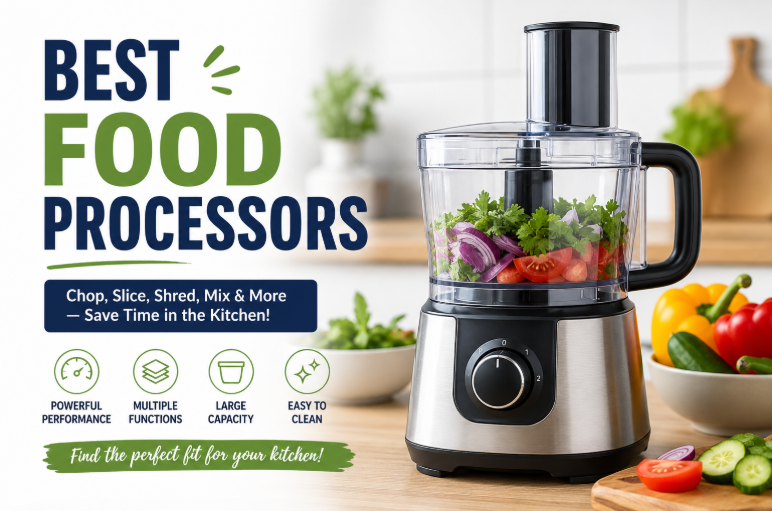
Best Food Processors: Find the Right Kitchen Workhorse for Your Home
A good food processor can completely change the way you prepare food. Tasks that once required a sharp knife, a cutting board, a box grater, and plenty of time can often be completed in just a few seconds. Whether you are chopping vegetables for dinner, slicing potatoes, shredding cheese, preparing homemade hummus, mixing dough, or making fresh salsa, a food processor can become one of the most useful appliances in your kitchen.
However, choosing the best food processor is not always easy. The market is filled with different sizes, motor powers, bowl capacities, attachments, and price points. Some models are designed for small everyday tasks, while others are powerful enough to handle large batches and heavy dough.
The right choice depends on how you cook and what you expect from your appliance.
In this guide, we will explore the most important features to consider when buying a food processor, the different types available, and the qualities that make one model better than another. Whether you are a beginner, a busy parent, a serious home cook, or someone who simply wants to save time in the kitchen, this guide will help you make a more confident decision.
What Is a Food Processor?
A food processor is a kitchen appliance designed to perform a wide variety of food preparation tasks. Unlike a traditional blender, which is primarily designed to process liquids and create smooth mixtures, a food processor is generally better suited for solid foods and preparation tasks.
Depending on the model and included accessories, a food processor can:
-
Chop vegetables
-
Slice fruits and vegetables
-
Shred cheese
-
Mix ingredients
-
Puree foods
-
Make sauces and dips
-
Prepare salsa
-
Grind nuts
-
Make breadcrumbs
-
Mix dough
-
Create nut butter
-
Prepare baby food
-
Grate vegetables and cheese
Most food processors consist of a motor base, a removable work bowl, a lid, and several blades or discs.
The versatility of this appliance is one of its biggest advantages. Instead of purchasing separate kitchen gadgets for different tasks, one food processor can often handle many jobs.
Why Buy a Food Processor?
Many people wonder whether a food processor is really necessary. After all, you can chop food with a knife and blend ingredients using a blender. However, a food processor offers several advantages that make it especially useful.
1. Saves Time
The biggest benefit is speed. Chopping several onions, carrots, and celery by hand can take several minutes. A food processor can often complete the same job in seconds.
This can be particularly helpful when preparing:
-
Large family meals
-
Holiday dinners
-
Meal-prep recipes
-
Homemade sauces
-
Large batches of vegetables
2. Provides Consistent Results
A food processor can produce more uniform slices, shreds, and chopped ingredients. Consistency is important when cooking because evenly sized ingredients often cook more evenly.
3. Handles Large Batches
A small manual chopper may work well for a single onion, but it becomes inconvenient when preparing food for a family. A full-size food processor can process much larger quantities at once.
4. Reduces Manual Effort
Food preparation can be tiring, especially when you are preparing large quantities of food. A food processor does much of the repetitive work for you.
5. Offers Multiple Functions
Many models include several blades and discs, allowing one appliance to perform multiple tasks.
The Different Types of Food Processors
Before choosing a model, it helps to understand the different categories available.
Full-Size Food Processors
Full-size food processors are designed for people who regularly cook larger meals or want maximum versatility.
They typically offer:
-
Large work bowls
-
Powerful motors
-
Multiple blades and discs
-
Dough-mixing capabilities
-
Large feeding tubes
These models are often the best choice for families and serious home cooks.
A full-size processor can be especially useful if you frequently prepare large quantities of vegetables, homemade dough, dips, sauces, or shredded ingredients.
Best For:
-
Families
-
Frequent cooking
-
Meal preparation
-
Large batches
-
Homemade dough and sauces
Compact Food Processors
Compact models are smaller and take up less space on the kitchen counter.
They are suitable for:
-
Small kitchens
-
Individuals
-
Couples
-
Simple chopping tasks
-
Small portions
Compact food processors are usually easier to store and clean. However, their smaller bowls and less powerful motors may limit what they can handle.
Best For:
-
Small households
-
Limited kitchen space
-
Occasional use
-
Simple food preparation
Mini Food Processors and Choppers
Mini food processors are designed for small tasks such as chopping garlic, herbs, onions, nuts, and small amounts of vegetables.
They are often affordable and easy to use.
However, they are not designed to replace a full-size food processor. If you frequently cook large meals, a mini model may feel too limited.
Best For:
-
Garlic and herbs
-
Small amounts of vegetables
-
Quick chopping
-
Simple everyday tasks
Important Features to Look For
When shopping for the best food processor, several features deserve special attention.
1. Motor Power
Motor power is one of the most important factors to consider.
A more powerful motor generally provides better performance when processing:
-
Dense vegetables
-
Nuts
-
Cheese
-
Dough
-
Large quantities of food
For basic chopping and slicing, you may not need an extremely powerful motor. However, if you want to make bread dough, nut butter, or large batches of thick mixtures, a stronger motor can be valuable.
The important thing is not simply to choose the model with the highest advertised wattage. Overall design, blade quality, bowl design, and motor efficiency also affect performance.
2. Bowl Capacity
The capacity of the work bowl determines how much food you can process at one time.
A smaller bowl may be suitable for one or two people, while larger households may benefit from a full-size bowl.
Think about your typical cooking habits.
If you usually prepare small portions, a large appliance may take up unnecessary space. If you frequently cook for several people, a small processor may require multiple batches.
A larger bowl can save time when preparing:
-
Coleslaw
-
Salsa
-
Soup ingredients
-
Dips
-
Dough
-
Shredded vegetables
3. Blade and Disc Options
The included accessories can significantly affect the usefulness of a food processor.
Common accessories include:
S-Blade
The S-shaped blade is the primary chopping blade. It can be used for:
-
Chopping vegetables
-
Pureeing
-
Mixing
-
Making dips
-
Preparing sauces
Slicing Disc
A slicing disc allows you to create uniform slices of vegetables and fruits.
It can be useful for:
-
Potatoes
-
Cucumbers
-
Carrots
-
Zucchini
-
Apples
Shredding Disc
A shredding disc is useful for:
-
Cheese
-
Carrots
-
Cabbage
-
Potatoes
-
Other vegetables
Dough Blade
Some models include a dedicated dough blade for mixing bread, pizza, and other doughs.
If you regularly bake, this attachment can be extremely useful.
4. Feeding Tube Design
The feeding tube is the opening in the lid through which ingredients are added.
A larger feeding tube can be more convenient because you may not need to cut food into very small pieces before processing.
This is particularly helpful when slicing:
-
Potatoes
-
Cucumbers
-
Carrots
-
Other long vegetables
Some models include different-sized feeding tubes for added flexibility.
5. Speed Settings and Pulse Control
Many food processors offer multiple speed settings and a pulse button.
The pulse function is particularly useful because it gives you greater control over texture.
For example, you may want:
-
Coarsely chopped onions for salsa
-
Finely chopped vegetables for a sauce
-
A smooth puree for baby food
Continuous processing may quickly turn ingredients into a paste, while short pulses allow you to stop at the texture you want.
A good food processor should offer simple and intuitive controls.
6. Ease of Cleaning
A food processor is only useful if you are willing to use it regularly.
Complicated cleaning can discourage people from using their appliance.
Look for:
-
Removable blades
-
Dishwasher-safe components
-
Smooth surfaces
-
Minimal hard-to-reach areas
-
Easy-to-remove bowls and lids
It is also important to handle blades carefully when cleaning them. Food processor blades are extremely sharp.
7. Storage Design
Food processors often come with several accessories, and storing them can become a challenge.
Some models include storage containers or compartments for blades and discs.
This can help keep your kitchen organized.
If your kitchen has limited cabinet space, consider the appliance's overall footprint before buying.
What Can You Make With a Food Processor?
One of the most attractive features of a food processor is its versatility.
Homemade Hummus
A food processor can create smooth, creamy hummus from chickpeas, tahini, olive oil, lemon juice, and seasonings.
You can adjust the texture based on how long you process the ingredients.
Fresh Salsa
Instead of chopping tomatoes, onions, peppers, and herbs separately, you can quickly combine them in a food processor.
Using short pulses helps preserve a chunky texture.
Homemade Pesto
Fresh basil, garlic, nuts, cheese, and olive oil can be turned into delicious homemade pesto in minutes.
Nut Butter
Some powerful food processors can grind nuts into homemade nut butter.
This process may require patience because nuts typically go through several stages:
-
Chopped nuts
-
Nut flour
-
Thick paste
-
Smooth nut butter
A strong motor can be particularly useful for this task.
Pizza and Bread Dough
Many full-size food processors can mix dough quickly.
This can be a convenient alternative to kneading by hand.
However, you should always follow the manufacturer's instructions and avoid exceeding the recommended capacity.
Shredded Cheese
A food processor can shred cheese much faster than a traditional box grater.
This is especially helpful when preparing:
-
Pizza
-
Pasta
-
Casseroles
-
Tacos
-
Salads
Homemade Breadcrumbs
Stale bread can be processed into breadcrumbs.
You can also add herbs and seasonings to create customized breadcrumbs for cooking.
Food Processor vs. Blender: Which One Do You Need?
Food processors and blenders may look similar, but they serve different purposes.
A blender is generally better for:
-
Smoothies
-
Soups
-
Liquid mixtures
-
Frozen drinks
-
Smooth purees
A food processor is generally better for:
-
Chopping
-
Slicing
-
Shredding
-
Mixing dough
-
Preparing thick dips
-
Processing solid foods
If you primarily make smoothies and liquid drinks, a blender may be the better choice.
If you want to prepare vegetables, dough, sauces, cheese, and thick mixtures, a food processor is usually more versatile.
Some kitchens benefit from owning both appliances.
How to Choose the Best Food Processor for Your Needs
The best model for you depends on your cooking style.
Best for Small Kitchens
Choose a compact food processor if:
-
You have limited counter space
-
You cook small portions
-
You live alone or with one other person
-
You want easy storage
A smaller model can handle basic chopping and mixing without taking over your kitchen.
Best for Families
A full-size food processor is usually the better choice for families.
Look for:
-
Larger bowl capacity
-
Powerful motor
-
Wide feeding tube
-
Multiple attachments
A larger appliance can save time when preparing meals for several people.
Best for Baking
If you frequently make bread or pizza dough, choose a model designed to handle heavier mixtures.
Look for:
-
Strong motor
-
Dough blade
-
Durable work bowl
-
Stable base
Not every food processor is designed for heavy dough, so check the manufacturer's specifications.
Best for Occasional Use
If you only need a food processor occasionally, an affordable compact model may be sufficient.
There is no need to spend a large amount of money on features you will rarely use.
Common Mistakes to Avoid
Choosing the wrong food processor can lead to frustration. Here are some common mistakes to avoid.
Buying Based Only on Motor Power
A high wattage number does not automatically mean better performance.
The overall design of the appliance matters.
Choosing a Bowl That Is Too Small
If you regularly prepare large meals, a small bowl may force you to process ingredients in multiple batches.
Ignoring the Included Accessories
Two models may look similar but offer completely different attachments.
Always check what is included in the box.
Forgetting About Storage
Food processors can take up more space than expected, especially when accessories are included.
Measure your available storage area before buying.
Choosing a Model That Is Difficult to Clean
If cleaning takes too long, you may stop using the appliance regularly.
Simple design can be more valuable than unnecessary features.
How to Use a Food Processor Safely
Food processors are convenient, but safety is important.
Always:
-
Read the instruction manual
-
Keep fingers away from sharp blades
-
Unplug the appliance before removing stuck food
-
Wait until the blades stop completely
-
Avoid overfilling the bowl
-
Make sure the lid is properly secured
-
Use the correct attachment for each task
Never try to remove food with your fingers while the appliance is plugged in.
The blades can remain extremely sharp even when the machine is turned off.
Tips for Getting Better Results
A few simple techniques can significantly improve your results.
Cut Large Ingredients Into Smaller Pieces
Although a food processor can handle many ingredients, cutting very large items into smaller pieces can produce more consistent results.
Use Short Pulses
Pulsing is often better than continuous processing when chopping vegetables.
Avoid Overfilling
Overfilling can prevent ingredients from moving properly and may lead to uneven results.
Add Liquid Gradually
When making sauces or dips, adding liquid slowly can help you achieve the desired consistency.
Clean Immediately
Cleaning the bowl and blades soon after use can prevent food from drying and becoming difficult to remove.
Are Expensive Food Processors Worth It?
An expensive food processor is not automatically the best choice for everyone.
Premium models may offer:
-
Stronger motors
-
Better build quality
-
More attachments
-
Larger capacities
-
Longer warranties
-
Improved controls
However, a budget model may be perfectly suitable for basic tasks.
The best value comes from choosing a food processor that matches your actual needs.
If you only chop onions and make occasional salsa, a simple model may be enough.
If you cook frequently, bake, prepare large meals, and want long-term durability, investing in a higher-quality model may make more sense.
Frequently Asked Questions
What size food processor is best for a family?
A medium-to-large food processor is generally a good choice for families. The ideal capacity depends on how much food you typically prepare at one time.
Can a food processor replace a blender?
Not completely. Food processors are excellent for chopping and solid ingredients, while blenders are generally better for liquids and smooth drinks.
Can you make dough in a food processor?
Many full-size food processors can mix dough, but you should follow the manufacturer's instructions and avoid exceeding the recommended capacity.
Are food processors difficult to clean?
Some are more complicated than others. Models with dishwasher-safe removable parts are usually easier to clean.
Can a food processor grind coffee beans?
Some models may be capable of grinding certain dry ingredients, but you should check the manufacturer's recommendations before using the appliance for coffee beans.
Is a mini food processor worth buying?
A mini processor can be extremely useful for small jobs such as chopping herbs, garlic, onions, and nuts. It is ideal for smaller households but may not replace a full-size model.
In My View: Finding the Best Food Processor
The best food processor is not necessarily the biggest, most powerful, or most expensive model available. It is the one that fits your cooking habits, kitchen space, household size, and budget.
For everyday cooking, a reliable food processor can save significant time and effort. It can help you prepare vegetables, sauces, dips, cheese, dough, and countless other ingredients quickly and consistently.
When choosing a model, pay attention to the features that will genuinely improve your cooking experience. Consider the bowl capacity, motor strength, included accessories, ease of cleaning, feeding tube, storage requirements, and overall design.
If you cook regularly and want to make food preparation faster, easier, and more enjoyable, investing in one of the best food processors can be a smart addition to your kitchen.
The right food processor will not replace your cooking skills—but it can make the preparation process much faster and more convenient.

developeradmin
GearInspector contributor. Passionate about helping you make smarter buys.