Digital Marketing Trends That Will Shape Business Growth in 2026
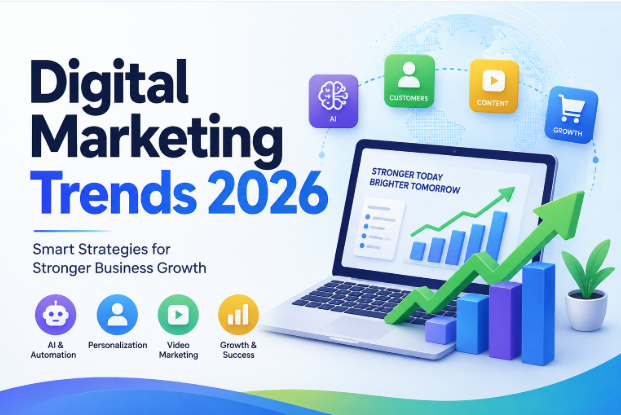
Digital Marketing Trends That Will Shape Business Growth in 2026
Digital marketing is evolving faster than ever before. New technologies, changing consumer behavior, and advanced artificial intelligence are transforming how businesses connect with customers. Companies that embrace these changes will have a significant competitive advantage, while those that ignore them may struggle to keep up.
In 2026, digital marketing is no longer just about running advertisements or posting regularly on social media. It is about delivering personalized customer experiences, using data intelligently, building trust, and creating valuable content that solves real problems.
Whether you own a small business, manage an eCommerce store, operate a startup, or lead a large enterprise, understanding the latest digital marketing trends can help you increase traffic, generate more leads, improve customer loyalty, and boost revenue.
In this comprehensive guide, we'll explore the biggest digital marketing trends that are expected to shape business growth in 2026.
Why Digital Marketing Matters More Than Ever
Consumers spend more time online than ever before. They search for products, compare prices, watch reviews, interact with brands on social media, and make purchasing decisions based on online experiences.
Businesses now compete not only on product quality and pricing but also on:
- Customer experience
- Online visibility
- Brand reputation
- Personalization
- Speed
- Trust
Companies that invest in modern digital marketing strategies can:
- Increase website traffic
- Build stronger customer relationships
- Generate qualified leads
- Improve conversion rates
- Lower advertising costs
- Grow revenue consistently
1. AI-Powered Marketing Will Become the Standard
Artificial Intelligence is no longer optional.
In 2026, AI helps marketers make smarter decisions faster than ever before.
Businesses now use AI for:
- Content creation
- Email marketing
- Customer segmentation
- Product recommendations
- Advertising optimization
- SEO analysis
- Customer support
- Sales forecasting
Instead of replacing marketers, AI improves productivity by automating repetitive tasks.
For example:
- AI can write first drafts of blog posts.
- AI analyzes customer behavior.
- AI predicts buying intent.
- AI recommends the best posting times.
- AI creates personalized email campaigns.
Businesses that combine human creativity with AI tools will outperform competitors.
2. Hyper-Personalization Will Drive Higher Conversions
Consumers expect brands to understand their needs.
Generic marketing messages are becoming less effective.
Modern businesses now personalize:
- Website experiences
- Product recommendations
- Email campaigns
- Advertisements
- Landing pages
- Mobile app content
Instead of showing every visitor the same content, businesses use customer data to display relevant offers.
Examples include:
- Recently viewed products
- Personalized discounts
- Location-based promotions
- Customized email recommendations
- AI-generated product suggestions
Personalization increases:
- Customer engagement
- Conversion rates
- Repeat purchases
- Customer satisfaction
3. Video Marketing Will Continue Dominating
Video remains one of the most powerful digital marketing tools.
Consumers prefer watching videos rather than reading lengthy product descriptions.
Businesses should invest in:
- Short-form videos
- Product demonstrations
- Customer testimonials
- Behind-the-scenes content
- Educational videos
- Live streaming
- Webinars
Platforms like YouTube, TikTok, Instagram Reels, Facebook Reels, and LinkedIn video continue to attract billions of users.
Video helps businesses:
- Build trust
- Explain products clearly
- Increase social engagement
- Improve conversion rates
- Strengthen brand identity
4. Voice Search Optimization Will Become More Important
More people now use voice assistants to search online.
Instead of typing:
"best running shoes"
Users may ask:
"What are the best running shoes for beginners under $100?"
This shift means businesses should optimize for conversational keywords.
Best practices include:
- Natural language content
- FAQ sections
- Long-tail keywords
- Local SEO optimization
- Fast-loading websites
Voice search also increases the importance of featured snippets in Google search results.
5. SEO Will Focus More on User Experience
Search engine optimization continues evolving.
In 2026, Google rewards websites that provide helpful, trustworthy, and user-friendly content.
Important SEO factors include:
High-quality content
Useful, original, and informative content performs better than keyword stuffing.
Website speed
Slow websites lose visitors quickly.
Mobile optimization
Most users browse from smartphones.
Core Web Vitals
Page experience remains an important ranking factor.
Topical authority
Publishing multiple high-quality articles around one subject helps establish expertise.
6. First-Party Data Will Replace Third-Party Cookies
Privacy regulations continue changing worldwide.
As third-party cookies disappear, businesses rely more on first-party data collected directly from customers.
Examples include:
- Email subscribers
- Customer accounts
- Purchase history
- Website interactions
- Surveys
- Loyalty programs
Building a strong email list becomes even more valuable.
7. Influencer Marketing Will Become More Authentic
Consumers trust real people more than traditional advertisements.
Instead of celebrity endorsements, brands increasingly partner with:
- Micro-influencers
- Industry experts
- Local creators
- Niche content creators
Smaller influencers often have:
- Higher engagement
- Better audience trust
- More targeted communities
Authenticity matters more than follower count.
8. Social Commerce Will Continue Growing
Social media platforms have evolved into shopping destinations.
Customers can now discover products and complete purchases without leaving the app.
Businesses should optimize social commerce by:
- Creating engaging product videos
- Using live shopping events
- Encouraging user-generated content
- Responding quickly to customer inquiries
- Simplifying checkout experiences
Social commerce shortens the customer journey and increases impulse purchases.
9. Marketing Automation Will Save Time and Money
Automation allows businesses to scale without dramatically increasing staff.
Popular automation includes:
- Email sequences
- Customer onboarding
- Lead nurturing
- Appointment reminders
- Cart abandonment emails
- SMS campaigns
- Social media scheduling
Automation improves consistency while allowing marketers to focus on strategy.
10. Interactive Content Will Increase Engagement
Interactive experiences encourage users to participate instead of simply consuming content.
Examples include:
- Quizzes
- Polls
- Surveys
- Interactive calculators
- Product finders
- Assessments
- Contests
Interactive content often generates more shares and longer website visits.
11. Omnichannel Marketing Will Become Essential
Customers interact with businesses across multiple channels.
They may:
- Discover a brand on Instagram
- Read reviews on Google
- Visit the website
- Receive an email
- Purchase through a mobile app
Businesses need consistent messaging across every platform.
An omnichannel strategy creates a seamless customer experience regardless of where people interact with the brand.
12. Local SEO Will Continue Driving Small Business Growth
Consumers frequently search for businesses near them.
Examples include:
- Coffee shops
- Restaurants
- Dentists
- Lawyers
- Plumbers
- Retail stores
Local SEO strategies include:
- Optimizing business profiles
- Collecting customer reviews
- Using local keywords
- Maintaining accurate contact information
- Publishing local content
Strong local visibility often translates into increased foot traffic and inquiries.
13. Content Marketing Will Focus on Expertise
Search engines increasingly prioritize content that demonstrates experience and expertise.
Businesses should create:
- Comprehensive guides
- Industry research
- Case studies
- Tutorials
- Expert interviews
- Original insights
Quality content continues to attract organic traffic long after publication.
14. Email Marketing Will Remain Highly Profitable
Despite the rise of new platforms, email marketing continues to deliver one of the highest returns on investment.
Successful email campaigns include:
- Personalized recommendations
- Educational newsletters
- Exclusive offers
- Product updates
- Customer success stories
Segmenting subscribers based on behavior significantly improves open and click-through rates.
15. Data Analytics Will Drive Better Decisions
Modern marketing relies on data rather than guesswork.
Businesses should monitor:
- Website traffic
- Conversion rates
- Customer acquisition cost
- Return on ad spend
- Bounce rate
- Customer lifetime value
- Engagement metrics
Analytics reveal what's working and where improvements are needed.
16. Customer Experience Will Become a Competitive Advantage
Exceptional customer experiences encourage repeat business and referrals.
Businesses should focus on:
- Fast website performance
- Easy navigation
- Responsive customer support
- Transparent pricing
- Personalized communication
- Smooth checkout processes
Happy customers often become loyal brand advocates.
17. Sustainability and Brand Values Will Influence Buying Decisions
Consumers increasingly support brands that demonstrate social responsibility.
Businesses can highlight:
- Sustainable packaging
- Ethical sourcing
- Community involvement
- Environmental initiatives
- Diversity and inclusion
- Transparent business practices
Authenticity is crucial—customers can quickly identify insincere messaging.
Practical Tips for Businesses in 2026
To stay competitive, businesses should:
- Invest in AI-powered marketing tools.
- Publish high-quality, SEO-optimized content regularly.
- Prioritize mobile-friendly website design.
- Build and maintain an email subscriber list.
- Use video as a core content format.
- Personalize customer experiences whenever possible.
- Leverage marketing automation to improve efficiency.
- Monitor analytics and adapt strategies based on performance.
- Strengthen local SEO for regional visibility.
- Focus on building trust through transparency and expertise.
Common Mistakes to Avoid
Many businesses fail to achieve digital marketing success because they:
- Ignore customer data.
- Publish low-quality content.
- Depend on only one marketing channel.
- Neglect mobile optimization.
- Overlook website speed.
- Use outdated SEO practices.
- Fail to measure campaign performance.
- Produce inconsistent branding.
- Prioritize sales over customer value.
Avoiding these mistakes can significantly improve long-term results.
The Future of Digital Marketing Beyond 2026
Looking ahead, digital marketing will continue becoming more intelligent, automated, and customer-centric. AI, predictive analytics, immersive experiences, and privacy-first strategies will shape the next generation of marketing.
Businesses that embrace innovation while maintaining authentic relationships with customers will be best positioned for sustainable growth. Success will come not from chasing every trend but from choosing the right technologies and tactics that align with business goals and customer needs.
Final Thoughts
Digital marketing in 2026 is about more than visibility—it's about creating meaningful, personalized, and trustworthy experiences that inspire action. From AI-powered automation and hyper-personalization to video marketing, local SEO, and first-party data strategies, the businesses that adapt to these trends will be better equipped to attract customers, build loyalty, and grow in an increasingly competitive marketplace.
Rather than trying to implement every new trend at once, start by identifying the areas that will have the greatest impact on your audience. Continuously test, analyze, and refine your approach. By staying informed and embracing innovation with a customer-first mindset, your business can thrive not only in 2026 but for years to come.

developeradmin
GearInspector contributor. Passionate about helping you make smarter buys.